
ROUBEN GALICHIAN (GALCHIAN)
Independent researcher and cartologist
Hon. Doctor of NAS RA
rgalichian@yahoo.com
Abstract
During the medieval times many toponyms around the area indicated by the convergence of Iran, Turkey and Azerbaijan borders were given the prefix “kara” or “ghara”.
Although today that particular prefix in the language of the locals, that is in the locally spoken Turkish, means black, but scholars claim that the meaning of this prefix in the medieval times was not “black” but “large”. It must be said that in the language spoken in the preset day Türkiye black is “siyah”, a Persian word, not “kara”.
With this assumption most of the toponyms bearing this prefix of the any given part of the world, become logical.
The paper explains in detail the false impression created by this mis-translation and all the toponyms find their logical explanations.
Keywords
Armenia, Azerbaijan, Türkiye, Iran, Local toponyms, Cartography, “kara” or “ghara” prefix.
Introduction
In the northwestern region of Azerbaijan province of Persia, which was once a part of the Greater Armenia and where for centuries large number of Armenians lived, there are a number of toponyms, which have the local Turkish or Azeri prefix of “ghara” or “kara”. If we accept these translations of the names, then Karabakh would mean Black Garden, Gharadagh – Black Mountain, Gharakilisen (St. Thaddeus Monastery) – Black Monastery, Karasu River – Black River, Karateppeh – Black Hill, etc. These names raise the question why the word “black”, which is the characteristic color of mourning among Armenians, Azeris, Turks and Persians, should be applied to such a variety of toponyms. This application seems not logical at all.
Geographical Locations
The common prefix “kara” or “ghara” is generally translated from the local Turkish as “black”, which is a direct translation of the word in the current Turkic-Azerbaijani language. However, when one considers the situation of toponyms and names with that particular prefix, they seem clearly to contradict the explanation provided by such translation of the prefix. Logically, these, should at least be related and referring to the characteristics of the place or locality bearing the given name.
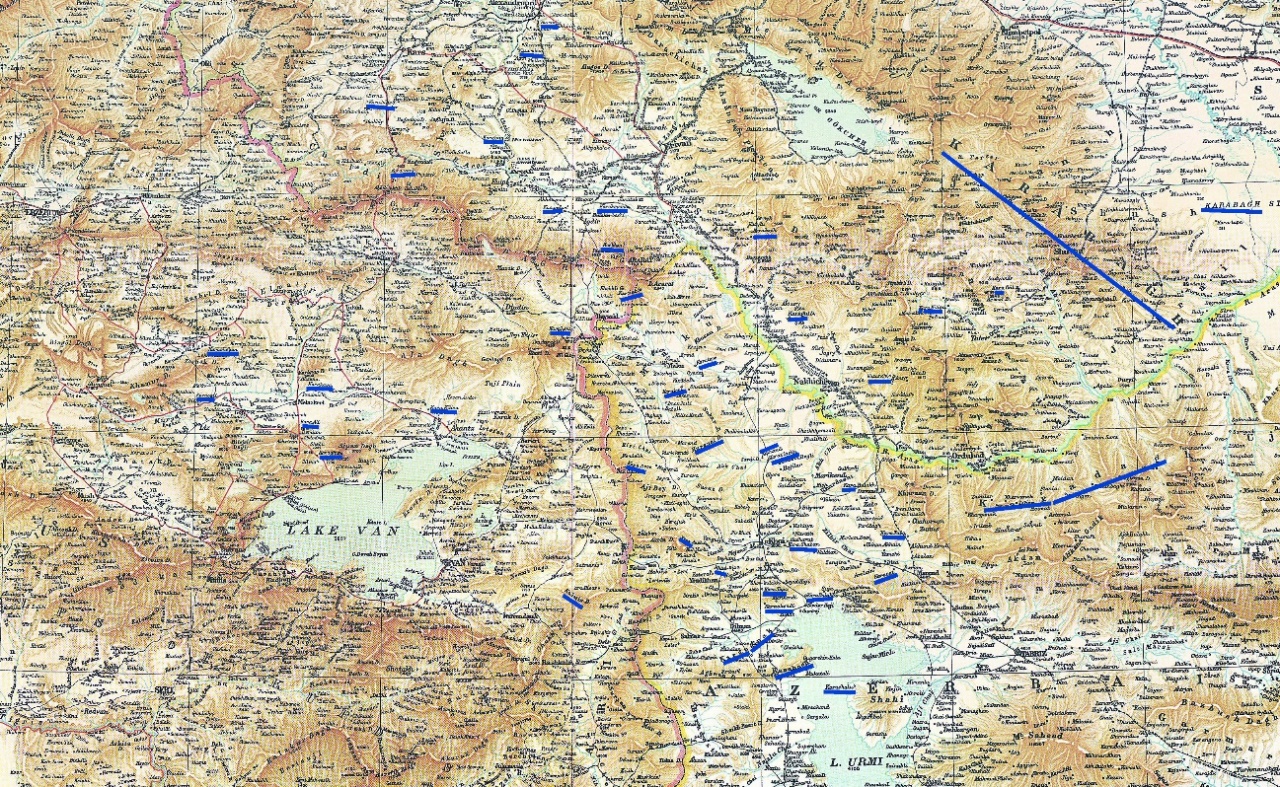
Fig.1 – Extract from the 1901 map of Armenia, by H.F.B Lynch, where we see part of the South Caucasus. Türkiye is on the left side of the map. At m ap’s lower part, on the southern shore of the Arax River lies the Iranian province of Azerbaijan (old Atropaten). In the center we see the territory of historic and present-day Armenia, and on the right is the territory of the Republic of Azerbaijan, here labeled as “Karabakh”. On this map there are more than 40 toponyms beginning with the prefix “kara”, all highlighted in blue.
The map of Fig.1 shows the region where the borders of Iran, Nakhichevan, Turkey, Azerbaijan and Armenia meet, on which the place names with the prefix “kara” are highlighted in blue, which is supposed to mean “black”. These toponyms are more than forty. In contrast, there is only one place name with the prefix of “agh” or “akh”, which in the local Turkish means “white”.
The Question of Language
It should be remembered that the people living in the northwestern region of Iran until the 15th-16th centuries spoke versions of the ancient Persian/Pahlavi language, which were the Tati and Harzandi languages. During the tenth to fourteenth centuries the region was occupied by Central Asian Turkic-speaking tribes, who had invaded the whole of the Caucasus. It was during this period that the indigenous peoples gradually replaced their orally transmitted language with the language of the rulering Turkic tribes.
Such language changes have also been made in South America (except Brazil), Mexico and the Philippines, where the natives, forgetting their spoken languages, gradually became Spanish-speakers. However, in the mentioned region of Iran, under rule of the Turkic tribes there also lived a large number of Armenians, who, having a written language, were able to preserve their native language and culture.
Regarding this mentioned prefix, Abdolali Karang, a linguist from Iranian Azerbaijan (Atropaten), in his book “Tati and Harzandi, two dialects of the ancient Azeri language” published in Tabriz in 1954-1955, states that “kale” or “kala” in these ancient dialects meant “large”. of that region. In Galin-Ghaya, Kilasur, Dizmar and other villages of Iranian Azerbaijan the old Persian Azeri dialects are still use, where the word “kala” means “large”. The modern Persian word “qalan” also means “large” or “huge”. Karang concludes that “kara” developed from this root and the original meaning of the word was “large” or “huge quantity”.
With such a new, radical explanation, the toponyms become completely logical. Using this explanation “Karabakh” becomes a “Great Garden”, which it actually is, “Gharadagh” would mean a “Great Mountain”, which is a large pile of mountains, “Gharakilisa” would mean “Great Church”, which is the largest monastic complex of that region, and “Karasu” would mean “Great River”, which is a shallow but very wide river, also “Ghara-aghaj” would mean “Big Tree”, which was really the biggest tree in Tabriz, aged a few hundred years or more.
In the Syunik Province of Armenia and the border of Azerbaijan there are two lakes. These have been translated into Armenian, the large one as “Black Lake” and the smaller one, as “Jan Lake”. Azerbaijanis call the big lake “Kara-gyol” and the smaller one “Jan-gyol”. The Azerbaijani name of large Kara Gyol, was translated into Armenian as “Black Lake”, based on the meaning of the current local Turkish prefix “kara”. Looking at the two lakes one cannot dismiss the fact that one is much larger than the other, so it is only logical to call the larger one “Great Lake”, which has been called “Kara Gyol” in the Middle Ages, when the local language of the time “kara” would be translated as “large”.
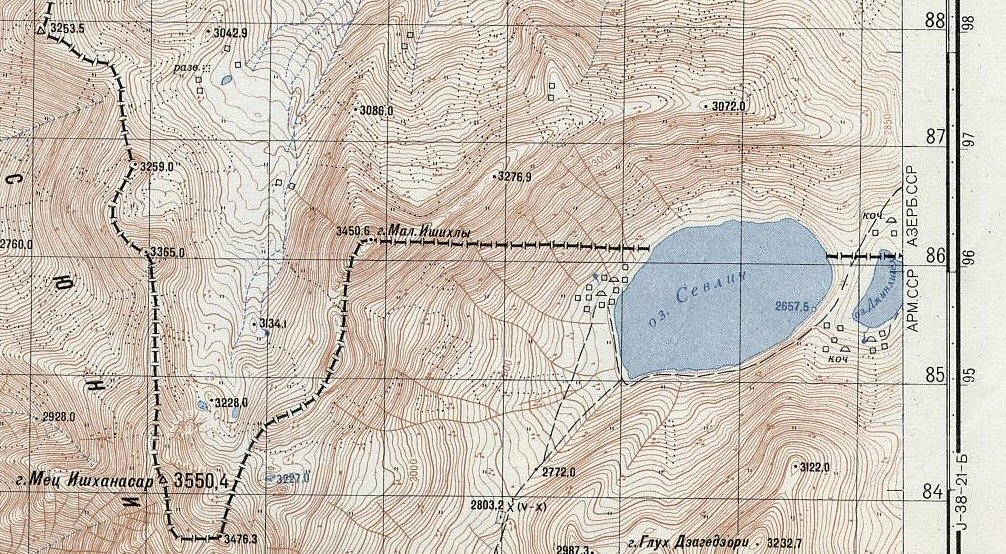
Fig. 2 – The border of Soviet republics of Armenia and Azerbaijan, near Goris, with the two lakes. On the map the large lake is named “Sevlich” (Black Lake), which is the incorrect Armenian translation of “Kara Gyol” (Black lake).
The author was once talking about this matter with a friend, Daryush Baybordi, an engineer from the Iranian province of Azerbaijan, to whom my explanations caused a great surprise. He said “Thinking back I remember that my grandfather was a giant of a man over two meters tall, and in the village, everyone addressed him as “Kara-Agha”. Now I realize why they did so. It seems that it was because he was actually a giant man and not dark-black-skinned one, as we originally thought”.
To further clarifying the matter, let us have a look at the satellite image of the mentioned area.
The sattelite image of the Iran-Armenia-Azerbaijan borders showing the physical attributes of the two regions of Karabakh and Karadagh. The first is a ragion full of greenery and the second, is a mass of mountains. Which are self explanatory!
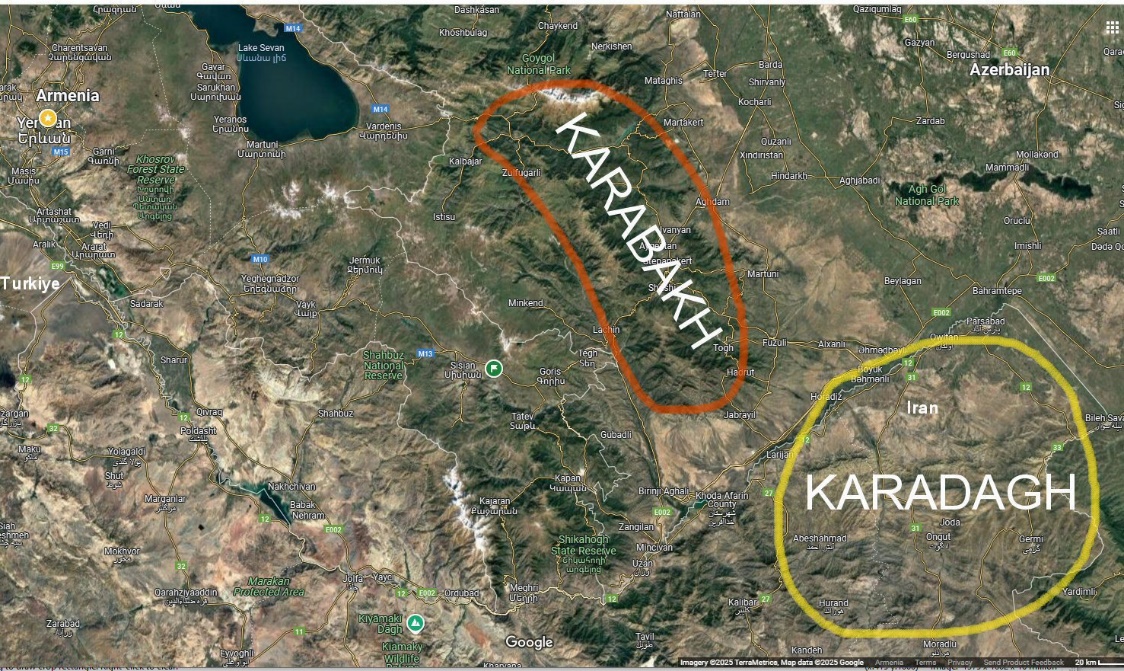
Fig. 3 – The regions of “Karabakh” (the green area encircled in red) in the Republic of Azerbaijan, and “Karadagh” (Mountainous area, encircled in yellow) located in Iran.
The History of the Researches
The Iranian Azerbaijani historian-linguist Ahmad Kasravi (Articles and lectures, Tehran 2536, p. 365/431) and Armenian historian Bagrat Ulubabyan (Khachen’s rule during the X-XVI centuries, Yerevan 1975, p. 42) also write about the meaning of the prefix kara or ghara as “great”. Many other Persian and Iranian Azerbaijani linguists such as Hossein-Ali Katebi, Mohammad-Ali Riahi Khoyi, Dr. Poor-Dawood, Reza Shoar, Hosseingholi Katebi and others are a few. Professor Yahya Zoka even composed a brief dictionary of Harzandi dialect (1957), where he translated the word “kala” and “kara” as “large”.
Perhaps the most famous among them is Dr. Enayatullah Reza (1920-2010), who studied at the universities of Tehran, Baku and Moscow, worked in China and France, and ended up managing the library of the University of Tehran and the local Institute of Iranian Studies. He is the author of many historical and other books and articles. His most important work is called “Azerbaijan and Aran”, where he states that the name of the Republic of Azerbaijan was copied by the Turkish nationalists from the Iranian province of the same name only for political reasons. The book has been reprinted more than a dozen times in Persian, and being translated into Armenian, Russian and English.
BIBLIOGRAPHY
Galichian, Rouben. Historic Maps of Armenia. I.B. Tauris, London: 2004.
Karang, Abdolali. Tati and Harzandi, two ancient dialects of the Azeri Language. Vaez-pour, Tabriz: 1954-1955.
Kasravi, Ahmad. “Azeri or the Ancient Language of Azerbaijan”, Collection of 78 Articles and Lectures, Ketabhaye Jibi, Tehran: 1976 (in Persian).
Lynch H.F.B. Armenia, Travels and Studies, 2 volumes. Longmans Green, London: 1901.
Reza, Enayatollah. Azerbaijan and Aran (Caucasian Albania). Bennett & Bloom, London: 2014.
Taleii, Aziz. Effect of the Arrival of the Turks on the Changes of the Language of the People of Azerbaijan. Al-Zahra University, Year 17. Iran: 2007.
Zoka, Yahya. A Brief Dictionary of Harzandi or Gelin-Ghiye. Tehran:1957
ՏԵՂԱՆՈՒՆՆԵՐՈՒՄ ԿԱՐԱ ԿԱՄ ՂԱՐԱ ՆԱԽԱԾԱՆՑԻ ՆՇԱՆԱԿՈՒԹՅՈՒՆԸ
Ռուբեն Գալչյան (Գալիչյան)
Անկած հետազոտող, քարտեզագետ
ՀՀ ԳԱԱ պատվավոր դոկտոր
rgalichian@yahoo.com
Ամփոփում
Միջնադարում Իրանի, Թուրքիայի և Ադրբեջանի սահմաններին կից տարածքում «կարա» կամ «ղարա» նախածանցով առկա են ավելի քան 40 տեղանուններ։
Թեև այսօր տեղացիների լեզվում այդ նախածանցը, որ տեղական թուրքերենում նշանակում է սև, բայց գիտնականներից շատերը պնդում են, որ միջնադարում այս նախածանցի իմաստը եղել է ոչ թե սև, այլ մեծ։
Այս ենթադրությամբ տարածաշրջանում նույն նախածանցը կրող տեղանունների մեծ մասի նշանակությունը դառնում է տրամաբանական։
Հոդվածը մանրամասնորեն բացատրում է այս սխալ թարգմանության արդյունքում ստեղծված թյուր տպավորությունը, որով տեղանունները գտնում են իրենց տրամաբանական բացատրությունը։
Բանալի բառեր՝ Հայաստան, Թուրքիա, Ադրբեջան, Իրան, տեղանուններ, քարտեզագրություն, «կարա» քամ «ղարա» նախածանց։